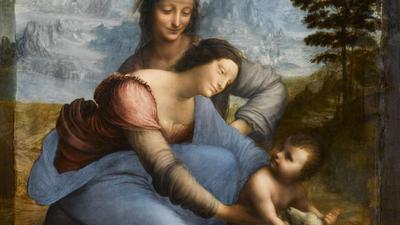
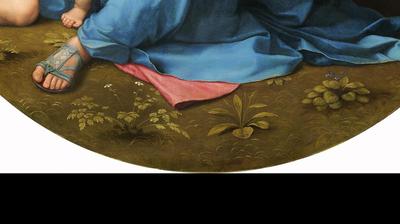
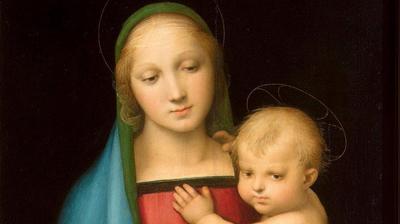
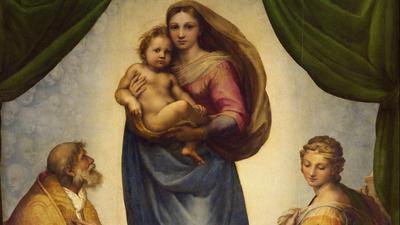
In the heart of the Uffizi Gallery sits the Doni Tondo, a circular masterpiece painted by Michelangelo around 1500. It remains the only finished panel painting by the Great Master to survive today, encased in its original, intricately carved wooden frame. At the center, the Holy Family is locked in a complex, spiraling embrace. Mary kneels on the sun-drenched grass, twisting her torso in a powerful yet graceful motion to reach for the Christ Child. Joseph sits behind her, his sturdy arms providing a protective cradle for the young boy. Their bodies form a solid, pyramid-like structure, radiating a sense of immense physical strength and divine intimacy. In the soft-focus background, a group of slender, nude figures lounge against a stone wall, separated from the family by a subtle horizontal ridge. The colors are strikingly vivid, defined by a technique that makes the skin look like polished marble and the drapery like heavy, iridescent silk. Notice the sharp, clean lines and the brilliant "cangiante" effect, where shadows shift into entirely different hues—bright pinks melting into deep oranges. The light is crisp and direct, casting clear shadows that give the figures a sculptural, three-dimensional presence, as if they might step out from the circular frame.
This work marks a turning point in art, where the human form becomes the ultimate vessel for spiritual expression. By blending the strength of sculpture with the brilliance of paint, Michelangelo captures a moment of sacred tension and monumental beauty. It is a timeless vision of harmony carved in color.