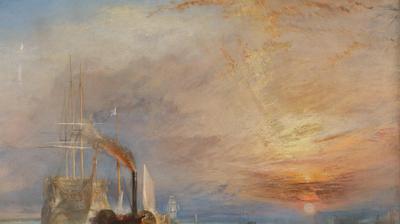
In 1844, the legendary J.M.W. Turner unveiled "Rain, Steam and Speed – The Great Western Railway," a masterpiece that captured the pulse of a changing world. It is a vision of modern technology emerging from the heart of nature. Through a veil of golden mist and driving rain, a dark, iron locomotive surges toward us across the Maidenhead Railway Bridge. Its black chimney glows with a faint, fiery heat, cutting through the swirling haze. To the left, a tiny rowing boat drifts on the quiet river below, while on the right, a hare—the fastest creature of the fields—bolts across the tracks, desperate to outrun the mechanical giant. The composition is breathtakingly fluid. Turner discards sharp lines for textured layers of oil, blending the sky and water into a symphony of muted golds, hazy greys, and deep indigos. His brushstrokes are energetic and tactile, making the steam feel heavy and damp, while the light flickers as if struggling through a summer storm. This atmosphere creates a sensory immersion, where the roar of the engine seems to echo against the silence of the valley.
This work is more than a landscape; it is a profound reflection on the relentless march of time. Turner contrasts the ancient rhythm of the countryside with the raw, unstoppable force of the Industrial Revolution. It remains a timeless encounter between the fleeting elements of nature and the enduring power of human innovation.