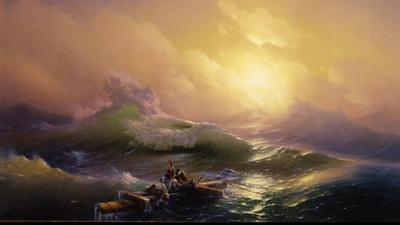
In 1633, a young Rembrandt van Rijn captured the raw power of nature and faith in his only known seascape, *The Storm on the Sea of Galilee*. This masterpiece depicts a small fishing boat caught in a violent tempest, struggling against the overwhelming forces of the dark ocean. As we look closer, the composition is split into two contrasting worlds. On the left, chaos reigns. A massive, foaming wave crashes over the bow, sending crystalline spray into the air. The disciples scramble in desperation—some pull frantically at the rigging, while another leans over the side in physical distress. In the center, the mast tilts at a precarious angle, heightening the sense of instability. Yet, on the right, a profound stillness emerges. There, in the shadows of the stern, Jesus remains calm, seemingly undisturbed by the howling winds.
Rembrandt’s genius lies in his use of dramatic light. A sudden, brilliant glow breaks through the heavy clouds, illuminating the white crests of the waves and the terrified expressions of the men. The rich, golden highlights clash with the deep, murky greens of the water, creating a visceral sense of danger. Every brushstroke feels urgent, capturing the salt-heavy air and the rhythmic heave of the vessel. This painting is more than a biblical scene; it is a study of human vulnerability. It places the viewer directly on that tilting deck, caught between the frantic fear of death and the quiet strength of hope. In this turbulent sea of shadow and light, Rembrandt reminds us that even in the heart of the storm, there is a center of gravity.