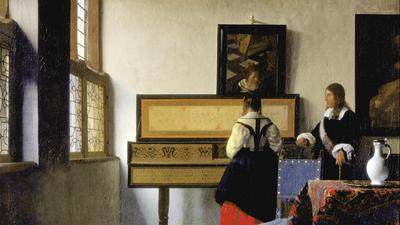
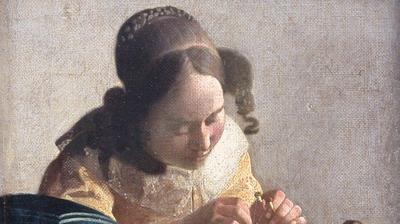
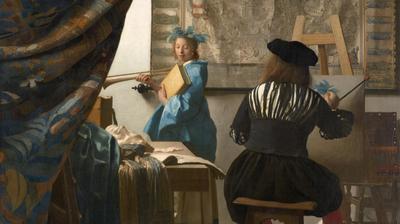
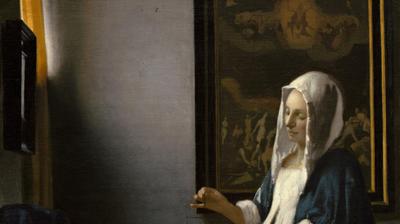
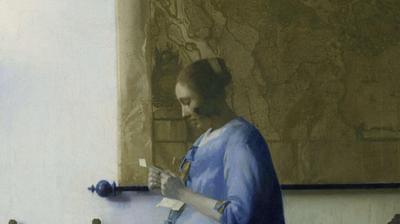
In 1658, Johannes Vermeer captured a fleeting moment of human connection in his masterpiece, Officer and Laughing Girl. This intimate scene invites us into a sun-drenched corner of a Dutch home, where a private conversation unfolds. A soldier sits in the foreground, his large silhouette and broad-brimmed hat creating a sense of depth and weight. Across the table, a young woman bathes in the morning light. She holds a delicate wine glass, her face radiant with a spontaneous, genuine smile. Her posture is relaxed, her eyes fixed on her companion, suggesting a playful and easy rapport between the two.
Vermeer’s genius lies in his mastery of light. A soft glow pours through the open window, catching the gentle texture of the yellow bodice and the subtle glint of the glassware. The map on the back wall is rendered with muted tones, its wrinkled surface feeling tactile and real. Through a sophisticated use of perspective and warm shadows, the artist creates a three-dimensional space that feels remarkably quiet yet alive. This painting is more than a simple encounter; it is a study of atmosphere and the beauty of the everyday. Vermeer transforms a casual social exchange into a timeless exploration of light, intimacy, and the quiet joys of domestic life. It remains a captivating window into a world of shared secrets and golden light.